Indoor Cat Enrichment: DIY Toys, Puzzles & Play Plans
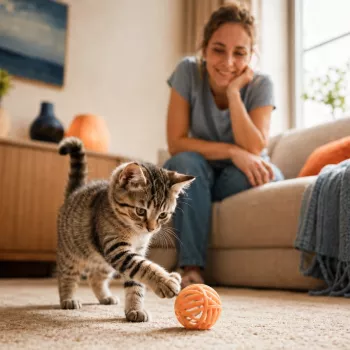
Enrichment Ideas for Indoor Cats: DIY Toys, Play Routines, and Cat-Friendly Home Tips
Indoor cats do best when their day includes “hunt-like” play, places to climb and observe, and small challenges that let them use their brains and bodies. A few simple routines—plus safe DIY toys made from household items—can reduce boredom, curb unwanted behaviors, and support a calmer, more confident cat at home.
Signs an indoor cat needs more stimulation
Many behavior issues are really “needs-not-met” signals. Watch for patterns that suggest your cat’s environment is too predictable or too quiet.
- High-energy zoomies at the same time daily paired with restlessness or vocalizing
- Overgrooming, chewing cords/plants, or scratching outside preferred areas
- Pouncing on ankles, swatting for attention, or play-biting that escalates quickly
- Sleeping all day with little interest in toys unless food is involved
- In multi-cat homes: tension, blocking access to litter/food areas, or frequent staring
If these show up suddenly or alongside appetite/litter box changes, consider a health check first. Helpful background reading is available from International Cat Care (iCatCare) and the ASPCA’s cat behavior resources.
A simple daily play routine that matches natural hunting
Consistency beats marathon sessions. Most cats respond best to short, focused play that ends with a “successful catch.”
- Aim for 2–3 short play sessions (5–10 minutes) instead of one long session
- Use a sequence: stalk → chase → pounce → “catch” → cool-down → small meal or treat
- Rotate toy styles (wand, kicker, ball, crinkle) to keep novelty without buying more
- End with success: let the cat “win” the toy a few times to prevent frustration
- For shy cats: begin with slow ground movements and play near cover (boxes, chairs)
Practical tip: if your cat gets “wired” and nippy, shorten the session, add longer pauses, and finish with a calm food activity (like a small puzzle) instead of revving the play intensity higher.
DIY cat toys from household items (safe, fast, and cheap)
Great enrichment doesn’t require a shopping spree. A few minutes and common items can create new “prey” to chase, bat, and tackle.
- Paper roll puzzle: fold ends, cut a few holes, add kibble/treats for batting and rolling
- Box “hide and pounce”: cut two exit holes and add tissue paper or packing paper (no strings)
- Sock kicker: fill a clean sock with fabric scraps; tie off securely; avoid loose ribbons
- Ice “hunt” (supervised): freeze a few treats in a shallow dish; offer on a washable mat
- Scent enrichment: rub a toy on a towel used by the cat; rotate towels to refresh familiar scents
DIY toy safety quick check
| Item | Use it for | Avoid if |
|---|---|---|
| Cardboard boxes | Hiding, pouncing, shredding | Staples, tape loops, or small detachable pieces |
| Paper bags | Crinkle play and ambush games | Handles (cut them off), thin plastic coatings |
| Toilet paper rolls | Treat puzzles and batting | If the cat eats cardboard—switch to a sturdier puzzle |
| Old socks | Kicker toys | If strings/threads are loose or the cat chews fabric |
| Ping-pong balls | Chasing on hard floors | If they can roll under appliances—block gaps first |
Food puzzles and foraging games that slow down snacking
For many indoor cats, food is the most motivating enrichment tool—especially if it mimics “work to eat.” The key is controlling calories while increasing engagement.
Cat-friendly home setup: vertical space, windows, and calm zones
For multi-cat homes, adding a second (or third) route to favorite spots can lower tension—cats often feel safer when they can pass without being cornered. Additional guidance can be found through the Cornell Feline Health Center.
A weekly enrichment plan that’s easy to stick to
Sample 7-day enrichment schedule
| Day | 5–10 minute play | Food enrichment | Home tip |
|---|---|---|---|
| Mon | Wand toy “stalk and pounce” | Scatter feeding | Refresh scratching area with catnip (optional) |
| Tue | Ball chase in hallway | Paper roll puzzle | Move a perch closer to a window |
| Wed | Kicker toy wrestling | Muffin tin challenge | Add a box “cave” in a quiet corner |
| Thu | Slow prey mimic (ground-level) | Treat trail to puzzle | Rotate 2 toys out / 2 toys in |
| Fri | Short training (sit/touch) with treats | Lick mat or slow feeder (if used) | Trim one nail tip and reward (if tolerated) |
| Sat | Obstacle play around chairs/boxes | Hidden kibble hunt | Build a quick box maze; remove strings/tape |
| Sun | Gentle play + long cool-down | Easy puzzle (rest day) | Wash bedding and rotate safe scents (towel swap) |
When enrichment isn’t enough: stress, overstimulation, and health checks
Printable guide to keep on the fridge
A ready-to-use checklist makes it easier to rotate toys, plan short play sessions, and vary puzzles week to week—especially when more than one person shares cat care. For a simple, print-and-post routine helper, see Printable Cat Enrichment Guide: DIY toys, play routines, and home tips.
If you like tracking habits at home, a general planning sheet can also help keep enrichment consistent: Goal-Setting Guide for Real Results – Printable Goal Planner. For households building dependable routines across the board, Essential Adult Skills Guide can be a useful companion for organizing schedules and responsibilities.
FAQ
How much playtime does an indoor cat need each day?
Many indoor cats do well with about 10–30 minutes total per day, split into 2–3 short sessions. Kittens often need more frequent play, while seniors may prefer gentler, shorter rounds with longer breaks.
What are safe DIY toys for cats?
Safe options include cardboard boxes, paper-roll treat puzzles, and securely tied sock “kicker” toys. Avoid strings, rubber bands, small detachable parts, and anything with adhesives or loose threads that could be swallowed.
How can enrichment help with nighttime zoomies?
Add a consistent late-day play session that ends with a small meal or food puzzle to create a “hunt then eat” rhythm. Boost daytime stimulation as well, and if zoomies appear suddenly or alongside behavior changes, rule out medical causes.











Leave a comment